
What does challenging authoritarianism look like?
Everyday activism, diaspora memory, and what South Africa can tell us about the long game

This week’s newsletter is coming in a little later than originally scheduled. I was in Cape Town for the International Communication Association’s annual conference, the first time in the association’s seventy-six-year history that it has been held on the African continent. Cape Town, in “post”-apartheid South Africa, is a place with its own very specific history of state violence, resistance, and memory. It is also a place that makes you think carefully about what movements look like when they win and what they look like when they don’t. All of this was on my mind when I chaired a panel on the theme of “Challenging Authoritarianism,” and the papers I heard there have stayed with me since.
Muscle-building instead of confrontation
The first paper was by Celine Liao, a PhD candidate at the University of Washington. She spent years with feminist student activists in China, young women organizing in the margins of an educational system designed to make organizing impossible. They distributed menstrual aid boxes in campus buildings, disguised feminist film screenings as lectures, and borrowed classrooms through personal favors. They built horizontal networks that were constantly disrupted and constantly regenerating. Liao calls this “rhizomatic labor”: decentralized, adaptive, emotionally and aspirationally costly, growing laterally because vertical growth — the visible and institutionalized kind — invites suppression.
What she found was that these women largely stopped demanding institutional reform. Instead, they became providers of alternative practices and resources: a feminist bookstore here, a mutual aid network there, a board game about rural girls’ lives playtested in feminist spaces to avoid stigmatization. It is not heroic dissidence. It does not make the news, nor does it intend to. It is the slow, unglamorous work of building muscle under conditions designed not just to atrophy it, but to cripple it.
Liao’s findings sit within a longer tradition of scholarship on how movements survive hostile periods. In Survival in the Doldrums, Leila Rupp and Verta Taylor documented the US women’s movement through the “bleak and lonely years” of the 1950s — a period when the movement didn’t mobilize masses or make headlines, but maintained itself through small “elite” networks and informal structures. And then the 1960s happened. Their work suggests that what looks like dormancy from the outside may be exactly the condition under which the next wave is being prepared. The people doing the work rarely know which it is.
Diaspora pressure and memorialization
But what about the people who can’t stay inside at all, or who are pushed out? The second paper was by Dr. Yuan Zeng of the University of Leeds. In April 2022, during Shanghai’s prolonged zero-COVID lockdown, a six-minute video briefly went viral on Chinese social media before censors took it down within hours. The video, known as “Voices of April,” montaged residents’ recordings pleading for food, medical access, and dignity over aerial footage of a city forced into silence. It was simple and devastating. And it was erased almost immediately.
But erasure and disappearance are not the same thing. The video circulated through diaspora networks, was archived on YouTube, subtitled, and emotionally re-contextualized by people outside China who kept it alive precisely because those inside could not. Dr. Zeng calls these practices “refracted counter-histories”: narratives ephemeral and partially erased within domestic digital spaces, but sustained outside them through translation, archiving, and what she calls affective witnessing. The state controls what can be remembered inside. It does not fully control what gets carried out.
This is one of the oldest functions of exile and diaspora under authoritarian rule. Those who leave, or are forced out, become the keepers of what the regime wants erased: the records, the names, the testimonies, the counter-narratives. In our most recent episode, Maria Repnikova drew exactly this distinction: the Chinese journalists who stayed and found ways to work within the system, and the Russian journalists now broadcasting from Amsterdam into a country that can no longer easily receive them. Both are resistance. The ones inside are building muscle. The ones outside are holding memory. The counter-histories travel, find new audiences, and acquire new meanings across contexts their creators never anticipated. They may not topple a regime. But they change what the regime can claim, and what the rest of the world can choose to ignore.
Is it working? Or is that even the right question?
The third paper on the panel, a multi-authored study presented by Tamer Farag of FU Berlin, examined pro-Taliban and oppositional media in Afghanistan, looking at the different resistance repertoires available to activists under one of the most repressive regimes in the world today. Its preliminary findings show that oppositional media consistently highlight the Taliban’s repression of women and the country’s economic suffering. The paper also raised the question that haunts all of this work: if the regime endures, do any of these efforts add up to anything?
The feminist student activists Liao documents, or the oppositional media in Afghanistan, are not organizing toward a visible victory. They are building something whose payoff is uncertain and whose costs are immediate and real. The diaspora networks preserving the Voices of April are not forcing a political opening. They are keeping a record for a future that may or may not arrive.
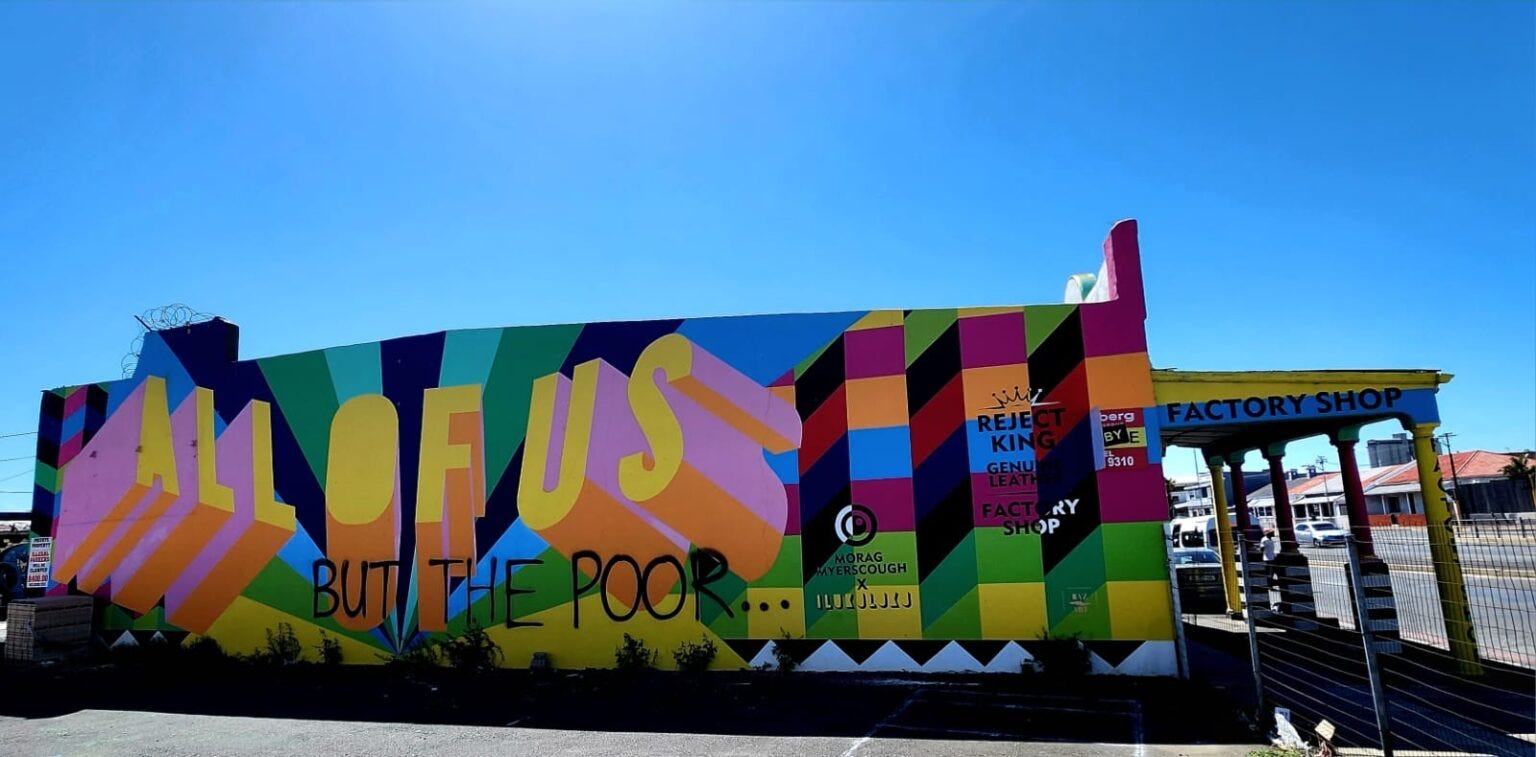
South Africa is one of the rare cases where both forms of resistance this panel documented actually did add up within living memory. The African National Congress operated in exile for decades, keeping records, building international pressure, and sustaining a counter-narrative the apartheid regime could not fully erase. The international anti-apartheid movement succeeded not through a single dramatic intervention but through the accumulation of documentary screenings, reading groups, boycotts at local retailers, campus divestment campaigns, coalitions between anti-nuclear activists and labor organizers and civil rights groups who found different reasons to care about the same cause. Inside the country, township organizing, trade unions, and community groups kept showing up without knowing if they would live to see what they were building matter.
And then apartheid ended. Not completely, though. The inequalities it produced have not been undone, and Cape Town today is one of the most unequal cities in the world. But it ended. All these efforts, small and large, did add up, despite every attempt to make resistance feel futile and the work feel pointless. Showing up matters. We just rarely get to see when or how.
Ekin and I talked to Dr. Maria Repnikova on the politics of dissidence, exile, and soft/hard forms of power from China to Russia to the US in our most recent episode. Listen here and see Dr. Repnikova’s publications here.